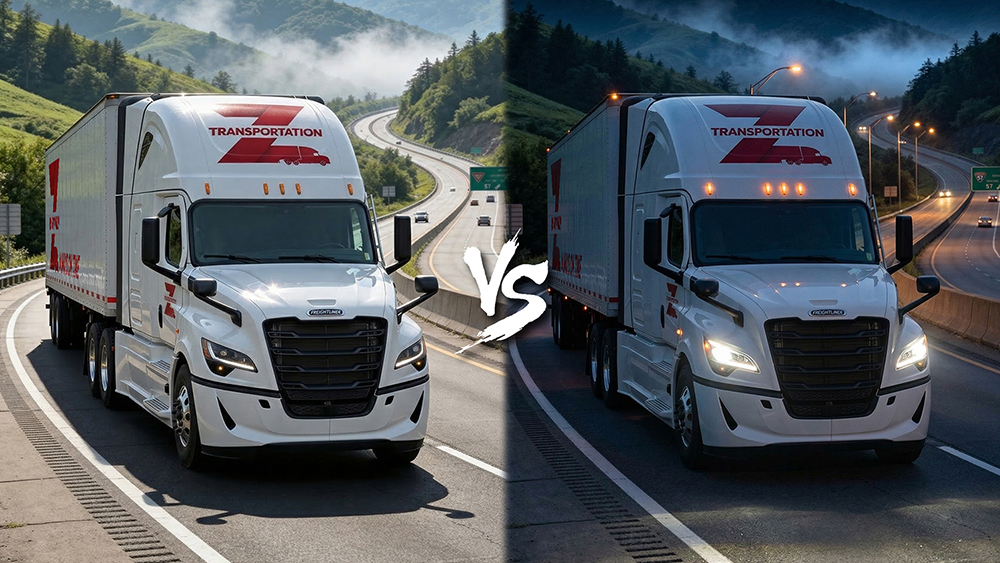

Day vs night truck driving is one of the most important lifestyle decisions CDL drivers make when planning long-haul routes and weekly schedules. Some drivers prefer the structure, visibility, and routine of daytime routes, while others feel more productive during overnight runs when highways are quieter and traffic flow is often smoother.
Choosing between day vs night truck driving is not only about personal preference. It can influence stress levels, safety perception, scheduling consistency, and overall comfort behind the wheel. For many professionals, understanding the realities of day vs night truck driving helps them create a routine that fits both their workload and lifestyle.
There is no one-size-fits-all answer. The better choice often depends on route structure, freight demands, individual sleep patterns, and how well a driver adapts to the rhythm of the road.
The Advantages of Day vs Night Truck Driving During Daylight Hours
When comparing day vs night truck driving, many CDL drivers lean toward daytime routes because of the visibility and familiarity they provide. Natural light makes it easier to read traffic conditions, spot road hazards, anticipate construction zones, and react to sudden weather changes.
Drivers who operate during the day often feel more connected to their surroundings, especially on unfamiliar routes. In many cases, daytime schedules also align more closely with standard business hours, which can simplify communication with dispatch teams, shippers, receivers, and maintenance support. For drivers who value structure, day vs night truck driving often feels more manageable during the day.
Day driving may also support more predictable planning cycles in certain freight networks. When appointments, loading times, and delivery windows are tied to daytime operations, staying on a daylight schedule can make coordination easier from week to week.
- Better visibility for road conditions and traffic patterns
- Easier awareness of construction zones and lane changes
- Closer alignment with business and warehouse hours
- Simpler communication with dispatch and customers
- A more familiar schedule for many drivers
At the same time, daytime routes can come with increased traffic density, urban congestion, and tighter timing expectations in busy regions. That is why some drivers who initially prefer daytime hours later reconsider day vs night truck driving after spending more time on the road.
Why Many Drivers Prefer Day vs Night Truck Driving at Night
For other drivers, day vs night truck driving becomes an easy decision once they experience the calmer rhythm of overnight highways. Night driving often means fewer vehicles on the road, fewer stop-and-go situations, and more uninterrupted stretches of highway.
Many experienced drivers say that nighttime routes allow them to maintain momentum more easily because traffic conflicts are reduced. In the conversation around day vs night truck driving, this smoother highway flow is often one of the biggest reasons drivers choose overnight schedules.
- Reduced traffic volume
- Smoother highway flow
- Fewer stop-and-go situations
- Potentially more consistent cruising speeds
- A quieter driving environment
Some drivers also find that there are fewer distractions at night. Without the heavy congestion, busy merge points, and constant daytime activity, the road can feel more controlled. For drivers who naturally stay alert later in the day, day vs night truck driving may feel easier and less stressful during overnight runs.
Still, night driving requires discipline. Rest cycles, alertness, meal timing, and long-term health habits become even more important when operating through overnight hours. A driver who chooses nighttime schedules without protecting sleep quality may quickly feel the downside of day vs night truck driving.

Day vs Night Truck Driving Safety Considerations
Safety is one of the biggest parts of the day vs night truck driving discussion. Both schedules offer advantages, but they also create different challenges depending on the route, the driver, and operating conditions.
Daytime drivers benefit from natural light and increased visibility. It is often easier to spot hazards sooner, judge road conditions more clearly, and stay aware of surrounding traffic. Nighttime drivers, on the other hand, often benefit from reduced congestion and fewer traffic conflicts, which can create a smoother overall driving experience.
In practice, day vs night truck driving safety depends on more than the clock. Route familiarity, planning quality, weather, traffic density, fleet organization, and driver alertness all play a role in how safe a run feels and how effectively it can be managed.
- Driver alertness and sleep quality
- Route familiarity
- Weather conditions
- Traffic density
- Fleet scheduling structure
- Dispatch coordination
In well-organized freight operations, both day and night schedules can be handled efficiently and professionally. That is why the debate around day vs night truck driving continues across the industry. Different drivers perform better under different conditions, and the safest schedule is often the one that best matches a driver’s routine and alertness pattern.
Freight Flow and Day vs Night Truck Driving Efficiency
Another important part of day vs night truck driving is how freight moves across major logistics corridors. High-volume lanes often operate around the clock, and distribution centers, manufacturing hubs, and retail supply chains depend on continuous movement of goods.
Because of this, both daytime and overnight schedules play a major role in keeping supply chains stable. Drivers who run structured lanes with reliable dispatch planning may experience smooth transitions between loads whether they operate during the day or at night. In many cases, day vs night truck driving efficiency depends more on freight planning quality than on the time of day alone.
That said, schedule choice can still affect fatigue, stress levels, and route feel. Some drivers handle warehouse timing, city access, and customer-facing hours better during the day. Others prefer the open-road momentum that often comes with overnight driving.
Lifestyle Impact of Day vs Night Truck Driving
Beyond logistics, day vs night truck driving also shapes a driver’s personal routine. Lifestyle balance often improves when a driver chooses the schedule that fits their natural energy patterns and long-term habits.
Some drivers prefer waking early, driving through daylight hours, and resting in the evening. Others feel naturally more focused at night and appreciate the quieter atmosphere. Over time, consistency becomes more important than trying to force a schedule that does not fit.
Predictability helps drivers manage energy, maintain concentration, and reduce unnecessary stress. Modern trucking fleets increasingly recognize that supporting driver routine, whether day or night, contributes to stronger long-term performance and overall satisfaction. As route experience grows, many drivers find that their view of day vs night truck driving changes as well.
Final Thoughts on Day vs Night Truck Driving
There is no universal answer when it comes to day vs night truck driving. The best choice depends on personal preference, route structure, freight demand, and how well a driver adapts their lifestyle to the road.
Drivers who take time to understand both options often discover that flexibility and consistency matter more than choosing one fixed schedule. With the right freight planning, modern equipment, and professional operational support, either schedule can feel manageable and productive.
Ultimately, success in day vs night truck driving comes down to consistency, planning, and knowing what works best for your driving style.
If you’re exploring how different driving schedules and routes impact your weekly experience, you may also find helpful insights in our detailed guide: Best States for Truck Drivers to Work and Earn More in 2026.
Join the Conversation – Driver Poll
We want to hear directly from drivers.
Are you more productive during daytime routes, or do you prefer the focus and flow of overnight driving?
👉 Visit our official Instagram profile and participate in the driver poll: Cast your vote here
Your experience helps shape future discussions and industry insights.