Truck Parking Crisis in 2026: Why Safe Overnight Parking is Becoming Harder Than Ever
For truck drivers across America, one problem is becoming impossible to ignore: the truck parking crisis in 2026 is getting worse, not better. What was once considered a frustrating inconvenience has now grown into one of the most serious infrastructure failures facing the trucking industry today.
Every single day, thousands of CDL drivers complete long, exhausting shifts only to face another challenge that should not even exist — finding a safe, legal place to park for the night. After hours of driving under strict deadlines, traffic pressure, weather conditions, and Hours of Service limits, many drivers are forced to spend even more unpaid time searching for parking that simply is not available.
What should be one of the most basic necessities in trucking has become one of its biggest nationwide failures.
And the consequences are far more serious than many people outside the industry realize.
Drivers are losing valuable driving hours searching for open parking spaces, burning fuel while circling crowded truck stops, violating Hours of Service limits because legal parking cannot be found in time, and being pushed into unsafe roadside parking situations that create major risks. On top of that, the mental strain is growing. Constant uncertainty about where to park each night increases stress, fatigue, anxiety, and burnout among drivers who are already under intense pressure every day.
The reality is simple: the truck parking crisis in 2026 is no longer just a driver inconvenience. It has become a major operational, safety, financial, and infrastructure problem affecting nearly every part of the trucking supply chain. It impacts drivers, carriers, shippers, law enforcement, and ultimately every business that depends on freight moving efficiently.
And perhaps the most troubling part is this: the problem is accelerating faster than solutions are being built.
So why is this happening now, and why is safe overnight parking becoming harder than ever?
Let’s break it down.
Why the parking crisis is reaching a breaking point
The trucking industry has grown rapidly over the past several years, but truck parking infrastructure has failed to keep pace. That imbalance is now one of the biggest reasons the truck parking crisis in 2026 is reaching a dangerous breaking point across the country
Freight demand continues to rise as e-commerce expands, supply chains become more time-sensitive, and distribution networks stretch farther into both urban and rural markets. More freight means more trucks on the road every day, but while the number of commercial vehicles keeps increasing, the number of safe and legal parking spaces has remained far behind. In simple terms, trucking capacity is growing much faster than the infrastructure needed to support it.
In many states, the problem is becoming impossible to ignore:
- Truck volumes have increased significantly year after year
- Rest area expansion projects have lagged far behind actual demand
- Urban freight congestion is making parking near delivery zones harder to find
- New truck parking construction projects remain underfunded or delayed
This shortage is creating a dangerous imbalance in the system. According to industry estimates, there is often only one legal truck parking space available for every eleven trucks currently operating on the road. That ratio is not just inefficient, it is unsustainable for a transportation network that depends on strict safety compliance and predictable driver rest periods.
What makes the truck parking crisis in 2026 even more severe is that many existing truck parking locations are also disappearing. In some regions, older truck stops are closing, private lots are being redeveloped for other commercial uses, and local zoning restrictions are making it harder to build new parking areas. Communities often resist new truck parking projects due to noise, traffic concerns, or land-use conflicts, which slows expansion even further.
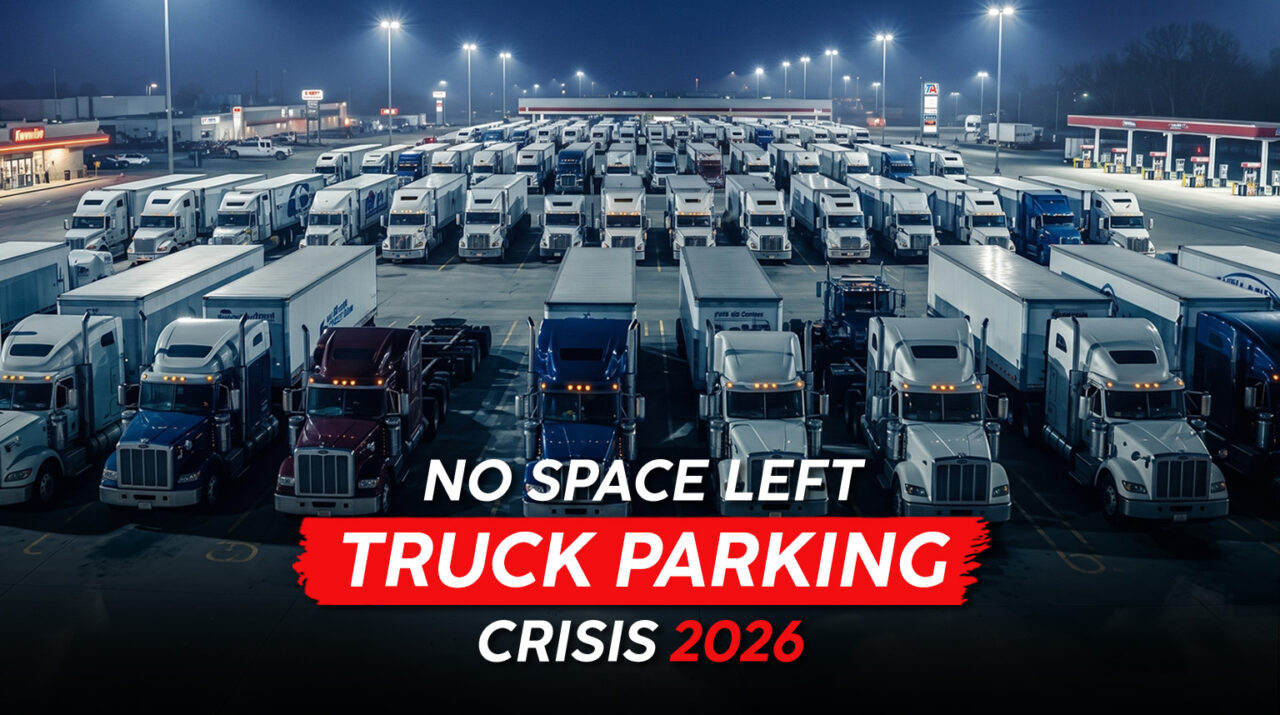
As a result, drivers are competing for fewer spaces than ever before. By late afternoon or early evening, many major truck stops are already full, forcing drivers into stressful last-minute decisions. The longer this imbalance continues without major investment, the worse the crisis becomes, and that is exactly why the truck parking crisis in 2026 is no longer a temporary shortage, but a structural national problem demanding urgent action.
The real daily cost for drivers
For drivers, the impact of the truck parking crisis in 2026 is not theoretical, it is personal, immediate, and felt every single day on the road. What may seem like a simple parking shortage from the outside becomes a serious daily burden for truckers who must plan every shift around an increasingly unreliable parking system.
The crisis creates real problems that directly affect drivers’ time, safety, and income, including:
- Lost driving time spent searching for available parking
- HOS pressure when legal hours expire before parking is found
- Unsafe roadside parking decisions when no legal spaces remain
- Increased fatigue caused by stress and delayed rest
Many drivers now spend anywhere from 30 minutes to more than an hour each night simply trying to locate a safe place to stop. That time is unpaid, unproductive, and emotionally draining. Instead of resting after long driving hours, drivers are forced into stressful searches that eat into sleep time and reduce recovery before the next shift begins.
Over weeks and months, that lost time adds up quickly, not only in missed earnings, but also in mental exhaustion. The longer the truck parking crisis in 2026 continues, the more drivers are paying the price in both financial loss and long-term burnout.
Why Safe Overnight Parking is becoming harder than ever
Several overlapping industry and infrastructure problems are making overnight truck parking more difficult than ever, and together they are pushing the truck parking crisis in 2026 to even more critical levels nationwide. What makes this issue especially dangerous is that there is no single cause — multiple pressures are hitting the system at the same time, making solutions harder to implement quickly.
1. More Freight, More Trucks
Freight demand continues to grow every year, especially with the expansion of e-commerce and faster delivery expectations. More freight means more trucks are operating daily, all competing for the same limited number of legal overnight parking spaces.
2. Lack of New Parking Development
In many states, truck parking construction has failed to match rising demand. While truck traffic has increased significantly, new rest areas and truck lots are being added too slowly to make a real difference.
3. Local Zoning Restrictions
Many communities resist building new truck parking facilities near cities or residential areas due to concerns about traffic, noise, and land use. These zoning barriers make expansion difficult even where demand is obvious.
4. E-Commerce Pressure
Faster shipping schedules create tighter delivery windows, forcing more drivers onto nighttime routes and increasing overnight parking demand at exactly the hours when spaces are already hardest to find.
Together, these pressures are making safe parking scarcer each year and accelerating the truck parking crisis in 2026 across the country.


Unsafe Parking is Becoming a Serious Safety Risk
When legal truck parking spaces run out, drivers are often left with no good options, only risky ones. That is why the truck parking crisis in 2026 is becoming far more than just an inconvenience or infrastructure shortage. It is now creating serious safety threats for drivers and the public alike.
With truck stops full and rest areas overcrowded, many drivers are forced into dangerous alternatives such as:
- Highway shoulders
- Exit ramps
- Empty industrial lots
- Unauthorized private property
These locations are often poorly lit, unsecured, and never designed for overnight truck parking. As a result, they create major risks including theft, accidents involving passing traffic, tickets and fines from law enforcement, and personal safety threats for drivers resting alone in isolated areas.
What makes this even more alarming is that many of these unsafe parking decisions happen not because drivers are careless, but because they simply have no legal alternative left. That is why the truck parking crisis in 2026 has become not only a trucking problem, but a growing public safety concern that affects highways, communities, and everyone sharing the road.
How Parking Shortages Affect Hours of Service Compliance
Parking shortages directly interfere with Hours of Service compliance, creating one of the most frustrating and unfair challenges drivers face in the truck parking crisis in 2026. FMCSA regulations require drivers to stop once their legal driving hours expire, but in many real-world situations, drivers reach those limits without being able to find an available parking space in time.
This creates impossible choices that no driver should have to make:
- Violate Hours of Service rules and risk citations
- Keep driving illegally while searching for parking
- Park in unsafe or unauthorized areas
Each option carries serious consequences. Drivers may face legal penalties, damage to their safety record, or dangerous roadside situations simply because proper parking is unavailable. The growing shortage of legal spaces is forcing drivers into decisions that create both legal and ethical risks, even when they are trying to follow the law correctly.
That is one reason the truck parking crisis in 2026 has become such a major regulatory issue, because compliance becomes nearly impossible when the infrastructure needed to obey the rules does not exist. For official Hours of Service regulations, drivers should always review guidance from the Federal Motor Carrier Safety Administration.
Technology is helping – But not fast enough
Technology is improving the way drivers search for parking, but it is not solving the root problem behind the truck parking crisis in 2026. Digital tools have made it easier to locate available spaces and plan routes more efficiently, yet even the best apps cannot create parking capacity where no physical spaces exist.
Several technology solutions are helping drivers manage parking challenges more effectively, including:
- Real-time truck parking apps that show open spaces nearby
- Smart parking reservation systems that allow drivers to book spots in advance
- GPS-integrated truck stop availability tools built into navigation systems
These innovations are valuable because they reduce guesswork and help drivers make faster decisions before reaching crowded parking areas. In many cases, they save time, reduce fuel waste, and lower stress by helping drivers avoid full truck stops.
However, there is a major limitation: technology improves efficiency, but it does not eliminate shortages. If every truck stop in a region is full, an app can only confirm the bad news faster, it cannot create new parking spaces. That is why, despite digital innovation, the truck parking crisis in 2026 remains unresolved. The real solution still depends on physical infrastructure expansion, not software alone.
The Economic Impact on Trucking Companies
The truck parking crisis in 2026 is not only hurting drivers, it is also creating major financial pressure for trucking companies and carriers across the industry. Parking shortages may seem like a driver-level problem at first glance, but the economic consequences ripple through every part of freight operations.
When drivers cannot find safe parking on time, companies lose money in several ways:
- Reduced driver productivity when time is wasted searching for parking
- Delayed deliveries caused by late rest breaks or forced route adjustments
- Missed appointments that damage scheduling efficiency
- Higher detention and idle-time costs when freight timelines are disrupted
These losses quickly add up across fleets. A delay caused by parking shortages can affect dispatch schedules, customer expectations, fuel efficiency, and route planning for multiple loads. In that sense, parking shortages are no longer just a driver inconvenience, they have become a supply chain issue that impacts profitability far beyond the truck itself.
What Needs to Change in 2026 and Beyond
Industry experts agree that solving the truck parking crisis in 2026 will require far more than temporary fixes or small local improvements. The shortage has now reached a level where isolated solutions are no longer enough. If the trucking industry wants real progress, national coordination between federal agencies, state governments, private companies, and infrastructure planners is absolutely necessary.
The reality is clear: the truck parking crisis in 2026 cannot be solved by technology alone, and it cannot be pushed onto drivers to manage individually. Without major structural investment, the shortage will continue getting worse as freight demand rises and more trucks enter the road network every year.
Several large-scale solutions are urgently needed:
- More federally funded truck parking construction across high-demand freight corridors
- Expanded rest area capacity at existing highway stops and interstate locations
- Better public-private partnerships between government agencies and truck stop operators
- Smarter zoning policy reform to make new truck parking development easier
- A national truck parking infrastructure strategy with long-term measurable goals
One of the biggest problems behind the truck parking crisis in 2026 is that parking expansion has been fragmented and inconsistent. Some states invest in new truck parking projects, while others fall years behind, creating uneven access across major freight routes. Drivers crossing multiple states often experience completely different parking conditions depending on regional funding priorities.
Federal transportation leaders are increasingly recognizing that truck parking is not optional infrastructure, it is essential freight infrastructure. Just like highways, bridges, and ports, truck parking capacity must be treated as part of the supply chain backbone. Without enough safe overnight parking, even the most efficient freight systems begin to fail under pressure.
If investment does not accelerate soon, the truck parking crisis in 2026 will continue worsening, leading to more unsafe parking, more Hours of Service conflicts, greater delivery delays, and higher costs for the entire trucking economy. The longer action is delayed, the harder and more expensive the solution becomes.

What Drivers Can Do Right Now
While long-term infrastructure improvements are still developing, drivers cannot afford to wait for national solutions. Until large-scale reforms begin to ease the truck parking crisis in 2026, the best defense is smart planning and proactive route management. Although these strategies do not solve the shortage itself, they can help reduce risk, lower stress, and improve the chances of finding safe overnight parking before legal driving hours expire.
For now, drivers can protect themselves by:
- Planning parking earlier in the day instead of waiting until evening peak hours
- Using truck parking apps before lots become full late at night
- Avoiding last-minute HOS parking searches that create dangerous pressure
- Identifying backup parking options along every route before starting a shift
These habits are becoming essential survival strategies in the truck parking crisis in 2026, especially as major truck stops fill faster than ever. Experienced drivers increasingly begin planning parking several hours before their shifts end, rather than assuming spaces will still be available later.
Preparation helps, but it is not a complete solution. Even the best planning cannot fix a nationwide shortage when parking demand exceeds available capacity in entire freight corridors. That is why so many drivers still find themselves forced into unsafe choices despite doing everything correctly. If safety concerns on the road matter to you, also read: 5 Red Flags to Avoid in a Trucking Company.
It pairs perfectly with understanding how the truck parking crisis in 2026 affects driver safety, legal compliance, and daily decision-making under pressure.
For national truck parking data, transportation policy updates, and infrastructure programs related to the truck parking crisis in 2026, visit the official U.S. Department of Transportation website.
Final Thoughts: Drivers Deserve Better Infrastructure
Truck drivers keep America moving.
Yet in 2026, too many still end every shift facing uncertainty over something as basic as safe overnight parking.
The truck parking crisis in 2026 is no longer a hidden issue inside trucking, it is a national logistics problem demanding urgent attention.
Until infrastructure catches up, drivers will continue paying the price in lost time, higher stress, and unnecessary risk.
And that should concern everyone who depends on freight.