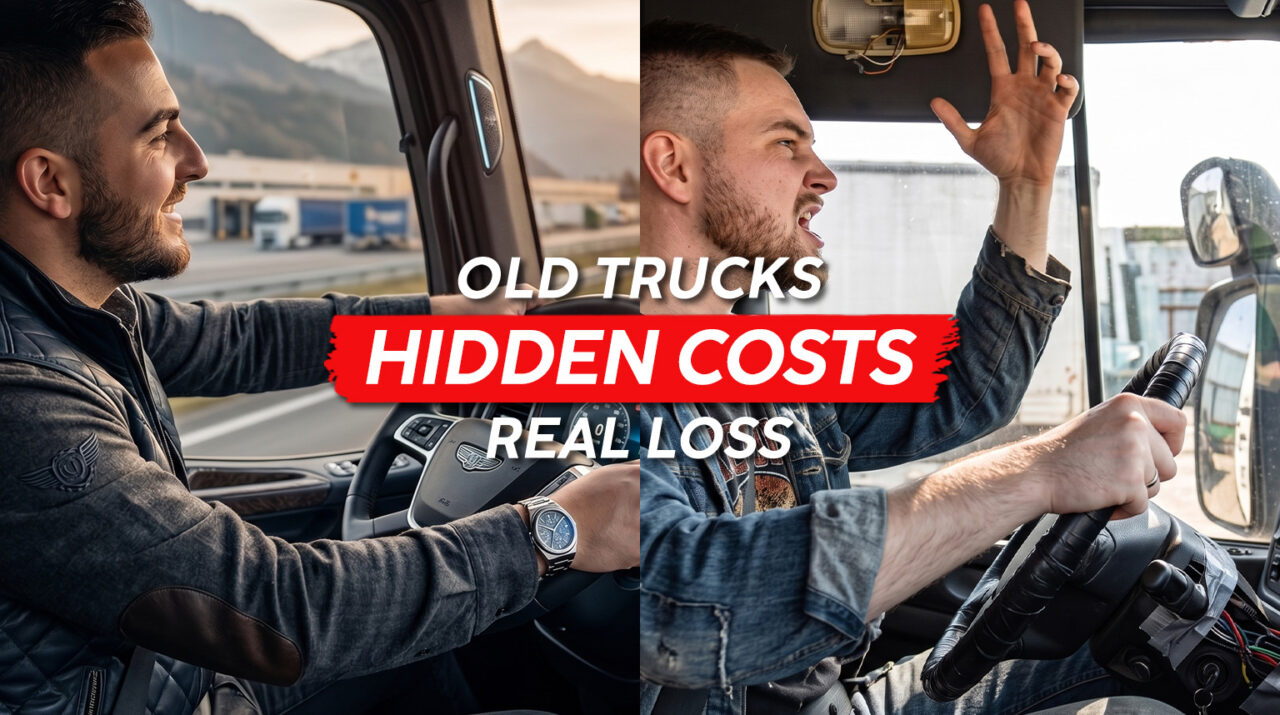
Bad Trucking Equipment Is Quietly Costing Drivers More Than They Realize
Bad trucking equipment is one of the most overlooked problems in the industry today. While most drivers focus on pay, miles, and routes, many underestimate how much bad trucking equipment affects their daily experience, income, and long-term career. At first glance, equipment may not seem like a priority compared to earnings, but over time it becomes one of the most important factors shaping a driver’s overall experience.
At first, it may not seem like a big deal.
A slightly older truck.
A few minor issues.
Basic interior.
These things are often dismissed as normal in trucking. Many drivers accept them as part of the job, especially early in their careers. However, what starts as small inconveniences can slowly turn into daily frustrations that affect performance, comfort, and overall job satisfaction.
But over time, bad trucking equipment starts to impact everything, from comfort and efficiency to stress and lost income. A truck that is not reliable or properly equipped creates constant challenges. Whether it is dealing with small mechanical issues, lack of comfort, or inefficient systems, these problems begin to add up. Over time, bad trucking equipment becomes a serious financial issue.
Many drivers don’t realize how much they are losing until they experience something better. Once they move to newer, well-equipped trucks, the difference becomes clear. Better equipment often leads to improved focus, reduced stress, and more consistent performance, all of which directly impact income and quality of life.
In reality, bad trucking equipment is not just a minor issue, it is a hidden factor that influences how drivers work, how they feel on the road, and how successful they can be over time.
Why Bad Trucking Equipment Is a Bigger Problem Than It Looks
Bad trucking equipment is not just about comfort, it directly affects performance, efficiency, and overall earnings. Many drivers underestimate how much their truck influences their day-to-day work, focusing instead on miles and pay. But in reality, the condition and quality of equipment play a major role in how smoothly everything runs on the road.
Old or poorly maintained trucks often come with:
- Higher fuel consumption
- Frequent mechanical issues
- Lower reliability on long routes
- Increased downtime
Each of these factors costs drivers money, even if it is not immediately obvious. Higher fuel consumption reduces profit margins, while frequent breakdowns lead to delays and missed opportunities. Over time, these small losses add up into significant financial impact.
When a truck is unreliable, time is lost.
When time is lost, income drops.
This connection is simple but powerful. Every hour spent dealing with mechanical issues or waiting for repairs is an hour not earning. In an industry where time directly equals money, even small inefficiencies can make a big difference over weeks and months.
That is how bad trucking equipment quietly reduces earnings without drivers even noticing at first.
What makes this problem even bigger is that many drivers get used to it. They adapt to delays, accept breakdowns as normal, and don’t always realize how much better their situation could be with newer, more reliable equipment. This normalization of poor equipment is what keeps the problem hidden.
In the long run, the difference between outdated and modern equipment can be massive. Better trucks reduce downtime, improve fuel efficiency, and create a smoother driving experience. That is why understanding the real impact of bad trucking equipment is essential for any driver looking to improve both performance and income.
The Hidden Costs Drivers Don’t Calculate
One of the biggest problems with bad trucking equipment is the hidden cost. While some issues are obvious, many of the real losses happen quietly over time, making them harder to notice at first. Drivers often focus on visible expenses, but the indirect impact of poor equipment can be just as damaging — if not more.
Drivers often deal with:
- Unexpected breakdowns
- Delays between loads
- Missed delivery windows
- Stress from unreliable performance
Each of these problems affects daily operations. A breakdown can lead to hours or even days of lost time. Delays between loads reduce overall productivity. Missed delivery windows can affect relationships with dispatch or customers. All of this adds up, even if it is not immediately reflected in a paycheck.
These issues don’t always show up directly in income, but they affect overall earnings and job satisfaction in the long run. Drivers may feel like they are working just as hard, yet not seeing the results they expect.
Over time, bad trucking equipment becomes a financial problem, not just a comfort issue.
What makes this even more challenging is that these costs are often spread out. Small delays here, a minor issue there, they don’t seem significant individually. But over weeks and months, they create a pattern of lost time, reduced efficiency, and increased stress.
In the long run, the difference becomes clear. Drivers using reliable, modern equipment experience fewer interruptions, better time management, and more consistent income. That contrast highlights just how much hidden cost poor equipment can create without drivers fully realizing it at first.
Comfort Is Not a Luxury, It Affects Performance
Many companies treat comfort as optional, but in reality, it directly affects driver performance more than most people realize. A driver who is well-rested and comfortable can focus better, react faster, and handle long hours on the road more efficiently. On the other hand, poor conditions inside the truck can slowly reduce both physical and mental performance.
Bad trucking equipment often means:
- Poor sleeper quality
- No proper storage
- Limited space
- Outdated interiors
When drivers are uncomfortable, sleep quality drops.
When sleep drops, focus drops.
And when focus drops, everything becomes harder.
Over time, this creates fatigue, frustration, and reduced productivity, making comfort an essential part of performance, not a luxury.


The Difference Modern Trucks Make
This is where modern fleets change everything. The difference between older equipment and newer trucks is not just noticeable — it is significant across every part of the job. From performance and reliability to comfort and daily efficiency, modern trucks are designed to eliminate many of the problems drivers have accepted as normal for years.
Newer trucks, like the Freightliner Cascadia Generation 5, are built with a strong focus on both performance and driver experience. They are designed for:
- Better fuel efficiency
- Higher reliability
- Advanced safety systems
- Improved driver comfort
These improvements are not just technical upgrades, they directly impact how drivers work and feel on the road. Better fuel efficiency helps reduce operational costs, while higher reliability means fewer breakdowns and less downtime. Advanced safety systems support drivers in critical situations, making long-haul driving safer and less stressful. Small issues caused by bad trucking equipment often lead to bigger problems.
Comfort also plays a major role. With better interior design and improved sleeper setups, drivers can rest properly and maintain energy levels throughout long trips. This leads to better focus, improved decision-making, and overall higher performance.
Instead of dealing with constant issues, drivers can focus on driving and earning.
Over time, this shift makes a huge difference. When equipment works with the driver instead of against them, productivity increases, stress decreases, and the entire job becomes more manageable. That is the real advantage of modern trucks, they don’t just move freight, they improve the driver’s entire experience.
Why Interior Features Matter More Than You Think
Modern trucks are no longer just vehicles, they are living spaces. For drivers who spend days or even weeks on the road, the interior of the truck becomes their daily environment. That is why interior features are no longer a luxury, but a key part of overall comfort, health, and performance.
Top-tier fleets now offer features like:
- Micro fridge
- Smart TV
- Microwave oven
- Improved sleeper design
- Better climate control
At first glance, these features might seem like simple upgrades. But in reality, they make a significant difference in everyday life. A micro fridge allows drivers to store fresh food instead of relying on expensive and unhealthy truck stop meals. A microwave oven makes it easier to prepare meals on the road, saving both time and money. A smart TV provides a way to relax and disconnect after long hours of driving, which helps reduce mental fatigue.
Improved sleeper design and better climate control also play a major role. Quality rest is essential in trucking, and a comfortable, well-designed sleeper can greatly improve sleep quality. Better temperature control ensures drivers can rest properly regardless of weather conditions, which directly affects energy levels and focus the next day.
These are not “extras.”
They directly improve quality of life on the road.
Drivers who have access to these features:
- Eat better
- Rest better
- Feel less stress
- Stay more productive
Over time, these small improvements add up to a much better overall experience. Drivers are not only more comfortable, but also more focused and efficient in their work. That is a major upgrade from outdated setups.
In today’s trucking industry, the difference between basic and modern interiors is clear. Trucks that are designed with the driver in mind create a healthier, more sustainable lifestyle on the road, and that directly impacts long-term performance and job satisfaction.
Why More Drivers Are Choosing Better Fleets
In 2026, more drivers are realizing that equipment matters just as much as pay. While salary and miles are still important, the overall driving experience is becoming a major factor when choosing where to work. Drivers are starting to understand that the quality of the truck they drive has a direct impact on their comfort, performance, and long-term satisfaction.
Instead of staying in outdated trucks and dealing with constant issues, many are moving toward companies that invest in:
- Newer equipment
- Driver comfort
- Reliability
- Long-term support
This shift is happening because drivers are becoming more aware of how much better their daily experience can be with the right equipment. Modern fleets reduce downtime, improve efficiency, and create a more comfortable work environment. Over time, this leads to less stress, better performance, and more consistent earnings.
Companies that invest in their fleet are also investing in their drivers. Newer trucks mean fewer breakdowns, better fuel efficiency, and improved safety systems, all of which make the job easier and more manageable. In addition, focusing on driver comfort shows a long-term commitment to retention and overall job satisfaction. Many drivers stay too long in bad trucking equipment without realizing the impact.
Companies like Z Transportation are focused on providing modern trucks like the Cascadia Gen 5, giving drivers a better experience both on and off the road.
With advanced features, improved interiors, and reliable performance, these trucks allow drivers to focus on their work without unnecessary distractions. At the same time, the added comfort helps create a more balanced lifestyle, even while spending long periods on the road.
This is why more drivers are making the switch, because in today’s industry, the right fleet can make a real difference not just in how much you earn, but in how you live and work every day.
The Real Cost of Staying in Bad Equipment
Many drivers stay in bad trucking equipment because they think it’s “normal.” Over time, they get used to small issues, older interiors, and constant minor problems, assuming that this is just part of the job. What often goes unnoticed is how much these conditions slowly affect performance, income, and overall well-being.
But the real cost includes:
- Lost income from downtime
- Higher stress levels
- Poor sleep and fatigue
- Lower job satisfaction
Each of these factors builds over time. A breakdown might seem like a one-time issue, but repeated downtime reduces total miles and earnings. Poor sleep from uncomfortable conditions affects focus and energy levels. Stress increases when drivers constantly deal with unreliable equipment.
Over time, this leads to burnout.
And that burnout often leads to quitting.
What makes this even more serious is that many drivers don’t connect the cause with the outcome. They may feel tired, frustrated, or unmotivated, without realizing that their working environment plays a major role. Staying in poor conditions for too long can turn a manageable job into a constant struggle.
In the long run, the cost is not just financial, it is physical and mental. Drivers who move to better equipment often notice immediate improvements in comfort, energy, and overall satisfaction. That contrast clearly shows how much staying in bad equipment can affect a career over time.

What Drivers Should Look for Instead
If you want to avoid the problems that come with outdated and unreliable trucks, it’s important to know what to look for when choosing a company or fleet. The quality of equipment directly affects your daily routine, comfort, performance, and overall satisfaction on the road. Making the right choice from the start can save you from long-term frustration and unnecessary stress.
Drivers should pay close attention to the condition and type of trucks they will be using. Modern, well-maintained equipment is no longer a luxury, it is a standard that directly impacts how efficiently and comfortably you can do your job. Companies that invest in their fleet are usually more focused on long-term driver success, not just short-term results. Many drivers stay too long in bad trucking equipment without realizing the impact.
If you want to avoid the problems of bad trucking equipment, look for:
- Modern truck models with updated technology
- A well-maintained fleet with regular servicing
- Comfortable sleeper setups designed for real rest
- Driver-focused features that improve daily life
These factors make a significant difference in your experience. A modern truck reduces the chances of breakdowns, improves fuel efficiency, and allows you to focus on driving instead of dealing with constant issues. A well-maintained fleet shows that the company values reliability and professionalism.
Comfortable sleeper setups are especially important for long-haul drivers. Proper rest directly affects energy levels, focus, and safety. Features designed with drivers in mind, such as better storage, climate control, and interior layout, help create a more livable space during long trips.
The right equipment can completely change your experience.
It can turn a stressful, exhausting job into something much more manageable and sustainable. Drivers who make the switch to better equipment often notice immediate improvements not only in comfort, but also in productivity, mood, and overall quality of life on the road. In today’s industry, choosing the right truck is just as important as choosing the right company.
Equipment Defines Your Experience
Bad trucking equipment is not just an inconvenience, it is a hidden cost that affects every part of your job. Many drivers underestimate how much bad trucking equipment impacts their daily routine, but over time, the effects become impossible to ignore. From performance to comfort and overall efficiency, bad trucking equipment creates constant challenges that reduce both productivity and job satisfaction.
Drivers who upgrade from bad trucking equipment to modern trucks often see immediate improvements in:
- Comfort
- Performance
- Income
- Overall job satisfaction
The difference between modern trucks and bad trucking equipment is clear. When drivers are no longer dealing with bad trucking equipment, they experience fewer breakdowns, less stress, and more consistent performance. This directly translates into better focus, improved efficiency, and more stable earnings.
In today’s industry, choosing the right company means choosing the right equipment, and avoiding bad trucking equipment altogether. Companies that invest in modern fleets understand how damaging bad trucking equipment can be, not only for performance but also for driver retention and long-term success.
Because at the end of the day, the truck you drive shapes the life you live on the road. Staying in bad trucking equipment often leads to frustration, fatigue, and lower income, while upgrading from bad trucking equipment can completely transform your experience and your career. If you want to avoid bad equipment and poor working conditions, also read: 5 Red Flags to Avoid in a Trucking Company.