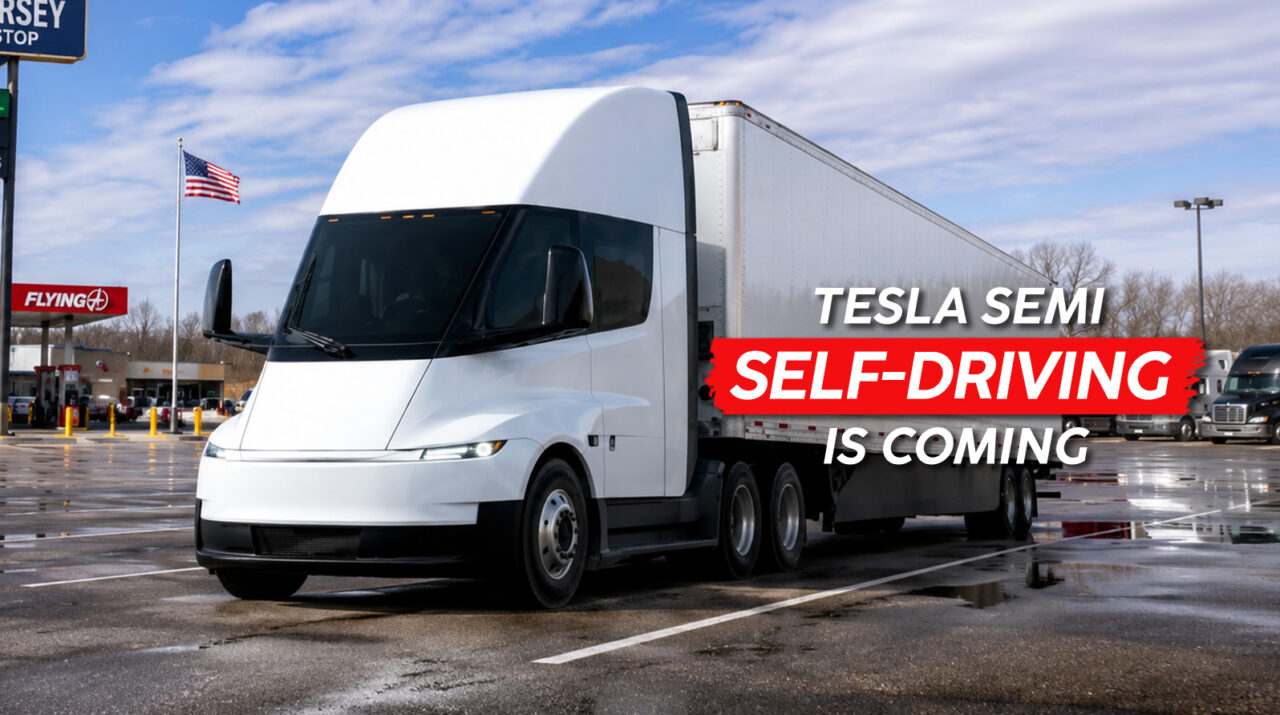
Tesla Semi Full Self-Driving Could Change Trucking Forever
The trucking industry has always evolved alongside new technology. From automatic transmissions and advanced safety systems to electronic logging devices and electric trucks, innovation has consistently reshaped the way freight moves across the country. Now, one of the most talked-about developments is Tesla Semi Full Self-Driving, a technology that could significantly change how commercial transportation operates in the years ahead.
Although fully autonomous commercial trucking has not yet become an everyday reality, Tesla continues to invest heavily in artificial intelligence, advanced driver assistance systems, and vehicle automation. The possibility of bringing Full Self-Driving capabilities to the Tesla Semi has generated widespread discussion throughout the transportation industry. Fleet owners, logistics companies, professional drivers, and technology experts are all asking the same question: What happens when Tesla Semi Full Self-Driving becomes available?
The answer is likely much different than many people imagine. Rather than replacing professional truck drivers, Tesla Semi Full Self-Driving is expected to serve as an intelligent driving assistant that helps drivers perform their jobs more safely, more efficiently, and with less physical and mental fatigue. Long highway stretches, repetitive driving conditions, and constant traffic monitoring place enormous demands on commercial drivers every day. Advanced automation could help reduce that workload while allowing drivers to remain fully engaged whenever human judgment is required.
The future of trucking has never been about eliminating drivers. Instead, it is becoming increasingly focused on combining skilled professionals with intelligent technology that supports safer decision-making and more reliable transportation. As artificial intelligence continues to improve, the relationship between drivers and technology may become one of the biggest competitive advantages in the industry.
Why Everyone Is Talking About Tesla Semi
Few vehicles have attracted as much attention in recent years as the Tesla Semi. Unlike many electric commercial trucks currently entering the market, Tesla designed the Semi with a completely different philosophy. The truck combines an electric powertrain, advanced onboard computing, over-the-air software updates, and a driver-focused cabin with the goal of improving efficiency while reducing operating costs.
For fleet operators, lower maintenance requirements, fewer moving engine components, and reduced fuel expenses make electric trucking an attractive long-term investment. For drivers, the Tesla Semi introduces a modern driving experience with improved visibility, a center-mounted seating position, and technology designed to assist rather than distract.
However, the feature generating the greatest excitement remains the possibility of Tesla Semi Full Self-Driving.
Tesla has repeatedly demonstrated its commitment to autonomous driving technology in its passenger vehicles, continuously improving software through millions of miles of real-world driving data. While commercial trucking presents a much more complex environment than passenger transportation, many experts believe heavy-duty trucks may eventually benefit from many of the same artificial intelligence systems.
The future of trucking is expected to rely increasingly on automation – not because drivers are becoming less important, but because transportation continues growing more demanding every year. Driver shortages, increasing freight volumes, longer highway routes, and growing safety expectations all encourage companies to explore technologies capable of improving productivity while reducing risks.
Automation is already becoming part of daily trucking operations. Adaptive cruise control, lane departure warnings, automatic emergency braking, blind-spot monitoring, predictive navigation, and collision avoidance systems have become common across many modern fleets. Tesla Semi Full Self-Driving represents the next step in that ongoing evolution, combining these individual technologies into one integrated driving assistance system.
Instead of viewing automation as something entirely new, many industry professionals see it as a continuation of safety innovations that have been gradually improving commercial transportation for decades.
What Is Tesla Full Self-Driving?
To understand what Tesla Semi Full Self-Driving could mean for commercial trucking, it helps to first understand what Tesla’s Full Self-Driving technology is designed to accomplish.
Tesla Full Self-Driving, commonly referred to as FSD, is an advanced driver assistance system that uses cameras, artificial intelligence, onboard computing, and neural networks to help perform various driving tasks. Depending on software capabilities and operating conditions, the system may assist with lane positioning, highway driving, navigation, traffic-aware speed adjustments, lane changes, and responding to surrounding traffic.
Importantly, current Tesla Full Self-Driving systems are driver-supervised. Even when the system is actively assisting with driving, the person behind the wheel remains responsible for monitoring the road and taking control whenever necessary.
If similar technology eventually expands to the Tesla Semi, the overall concept is expected to remain very similar.
Rather than completely replacing human decision-making, Tesla Semi Full Self-Driving would likely assist professional drivers during predictable highway driving situations while continuously monitoring surrounding traffic, road conditions, lane positioning, and vehicle behavior. Artificial intelligence could manage repetitive driving tasks, allowing drivers to dedicate more attention to situational awareness and overall safety.
Commercial trucking presents unique challenges that passenger vehicles rarely encounter. Tractor-trailers operate with significantly greater weight, longer stopping distances, changing cargo loads, varying weather conditions, steep mountain grades, construction zones, and complex delivery environments. Because of these additional responsibilities, autonomous systems for heavy-duty trucks must meet even higher safety standards before becoming widely adopted.
For this reason, most transportation experts expect Tesla Semi Full Self-Driving to evolve gradually through continuous software improvements rather than appearing overnight as a completely autonomous solution.
Drivers Aren’t Going Anywhere
One of the biggest misconceptions surrounding autonomous trucking is that technology will eliminate professional drivers. In reality, most experts expect exactly the opposite.
Even if Tesla Semi Full Self-Driving reaches highly advanced levels of capability, drivers will almost certainly remain inside the cab, supervising the system and remaining ready to take control whenever conditions require human judgment.
Commercial transportation involves far more than steering down the highway. Drivers inspect equipment before every trip, secure cargo, communicate with dispatchers, navigate customer facilities, perform backing maneuvers, respond to changing weather conditions, complete deliveries, and make countless real-time decisions that artificial intelligence cannot always anticipate.
Construction zones, emergency vehicles, unexpected road closures, equipment failures, customer instructions, and unpredictable traffic situations still require experienced human judgment. These responsibilities make professional truck drivers indispensable even as automation continues advancing.
Instead of replacing drivers, Tesla Semi Full Self-Driving could significantly improve the overall driving experience. Long hours spent maintaining lane position on interstate highways often create mental fatigue, even for highly experienced professionals. Allowing advanced software to assist during repetitive driving conditions may reduce stress while helping drivers remain more alert when their attention is needed most.


How Tesla Semi Full Self-Driving Could Improve Daily Trucking
As discussions around Tesla Semi Full Self-Driving continue to grow, many people immediately focus on one question: Will trucks eventually drive themselves? While that question often dominates headlines, it overlooks the much more practical impact this technology could have on the everyday lives of professional drivers.
The trucking industry operates under demanding conditions. Drivers spend long hours on the road, navigate changing traffic patterns, adapt to weather conditions, monitor vehicle performance, and ensure every load reaches its destination safely. These responsibilities require constant concentration, making trucking one of the most mentally demanding professions in transportation.
If Tesla Semi Full Self-Driving reaches commercial deployment in the future, its greatest value may not come from replacing drivers – it may come from helping them perform their jobs more safely, comfortably, and efficiently every single day.
Instead of viewing artificial intelligence as a substitute for human experience, many transportation experts believe the future lies in collaboration. Technology can handle repetitive driving tasks while experienced drivers continue making the critical decisions that only humans can make.
Less Driver Fatigue
Driver fatigue remains one of the biggest challenges facing the trucking industry today. Even experienced CDL drivers understand that spending eight, nine, or ten hours concentrating on highway traffic demands continuous mental effort. Maintaining lane position, monitoring surrounding vehicles, adjusting speed, and anticipating traffic patterns require constant attention from the moment a trip begins until it ends.
While professional drivers are highly trained, mental fatigue naturally increases after long periods of repetitive driving. The physical demands of operating a commercial vehicle are only one part of the job. Remaining mentally alert for hundreds of miles is often even more challenging.
This is where Tesla Semi Full Self-Driving could make a meaningful difference.
During long interstate highway routes, advanced driving assistance could help maintain consistent lane positioning, adjust speed according to surrounding traffic, and respond smoothly to changing highway conditions. Rather than forcing drivers to manage every small steering correction or speed adjustment themselves, the system could reduce repetitive workload while drivers continue supervising the vehicle.
Reducing mental workload does not mean drivers become less involved. Instead, it allows them to focus more attention on the overall driving environment rather than performing the same repetitive tasks hour after hour.
Professional truck drivers often describe highway driving as mentally exhausting, especially during long stretches of relatively unchanged road conditions. Even though the driving itself may appear simple, maintaining concentration over extended periods requires significant mental energy.
If Tesla Semi Full Self-Driving successfully assists during these repetitive highway situations, drivers may finish each trip feeling less mentally drained while remaining better prepared to handle challenging traffic, city driving, construction zones, or unexpected emergencies later in the route.
For trucking companies, reducing driver fatigue could also contribute to improved productivity, fewer stress-related incidents, and a more sustainable working environment for experienced drivers.
Improved Safety
Safety has always been the highest priority in commercial transportation, and it is one of the primary reasons advanced driver assistance technologies continue evolving across the industry.
Most commercial vehicle accidents are not caused by mechanical failures – they result from human factors such as distraction, fatigue, delayed reactions, or simple mistakes made during stressful driving situations. Even the most experienced drivers occasionally encounter unexpected events that require split-second decisions.
This is why many experts believe Tesla Semi Full Self-Driving has the potential to become an important safety partner rather than simply another convenience feature.
Artificial intelligence never becomes physically tired. It continuously monitors surrounding traffic, lane markings, nearby vehicles, speed differences, and road positioning while processing information many times every second. Combined with cameras and onboard computing systems, the technology may recognize developing situations before they become critical.
At the same time, driver monitoring remains equally important.
Future versions of Tesla Semi Full Self-Driving are expected to require drivers to remain attentive and ready to intervene whenever necessary. Instead of encouraging drivers to disengage from driving, the system would continuously verify that the operator remains alert and capable of taking control immediately if conditions exceed the software’s capabilities.
Another important advantage involves reaction time.
While professional drivers make excellent decisions every day, computers can process multiple visual inputs simultaneously without becoming distracted or fatigued. In situations where milliseconds matter, advanced driver assistance may help identify potential hazards sooner, apply controlled braking earlier, or assist with emergency steering responses when appropriate.
Collision avoidance technologies are already becoming common across modern commercial fleets, and Tesla Semi Full Self-Driving would likely build upon these existing safety systems. Automatic emergency braking, lane departure assistance, forward collision warnings, blind-spot awareness, and adaptive cruise control could all work together through one intelligent platform designed to reduce preventable accidents.
Although no technology can eliminate every risk, combining experienced human judgment with continuous artificial intelligence monitoring may significantly improve overall highway safety.
Better Fuel & Energy Efficiency
Efficiency is another area where Tesla Semi Full Self-Driving could provide substantial benefits for both drivers and fleet operators.
Commercial transportation depends heavily on smooth and predictable vehicle operation. Aggressive acceleration, sudden braking, inconsistent speeds, and unnecessary steering corrections all increase energy consumption while placing additional wear on the vehicle.
Artificial intelligence excels at maintaining consistency.
Rather than reacting abruptly to changing traffic conditions, Tesla Semi Full Self-Driving could optimize acceleration, maintain smoother following distances, and perform gradual speed adjustments that maximize vehicle efficiency.
Predictive braking represents another important advantage.
Instead of waiting until the last possible moment to slow down, intelligent driving systems can analyze traffic farther ahead and begin reducing speed earlier when appropriate. This smoother driving style not only improves passenger comfort but may also reduce unnecessary energy consumption and brake wear.
Route optimization could become even more valuable in future versions.
By combining navigation data, elevation changes, traffic information, weather conditions, charging availability, and historical driving data, Tesla Semi Full Self-Driving may eventually recommend more efficient routes that reduce travel time while maximizing battery performance.
For electric commercial trucks like the Tesla Semi, every improvement in efficiency contributes directly to increased driving range. Better energy management means fewer charging stops, improved fleet utilization, and lower operating costs over the lifetime of the vehicle.
These improvements benefit everyone involved – from fleet managers responsible for operating expenses to drivers who enjoy smoother, less stressful trips throughout the day.

What the Future Could Look Like
The future of commercial trucking is unlikely to be defined by fully autonomous vehicles replacing professional drivers overnight. Instead, it will most likely be shaped by gradual improvements that combine advanced technology with human expertise. As artificial intelligence continues to evolve, systems like Tesla Semi Full Self-Driving could become another valuable tool that helps drivers perform their jobs more safely, efficiently, and comfortably while maintaining full responsibility for the vehicle.
The trucking industry has always adapted to new technologies. From GPS navigation and electronic logging devices to collision avoidance systems and adaptive cruise control, innovations that once seemed revolutionary have gradually become standard equipment. Tesla Semi Full Self-Driving may follow a similar path, expanding over time as technology matures, regulations evolve, and companies gain confidence in advanced driver assistance systems.
Rather than dramatically changing trucking overnight, the future will likely involve steady progress built on real-world experience and continuous software improvements.
Challenges Still Ahead
Although the potential benefits of Tesla Semi Full Self-Driving are exciting, several important challenges must still be addressed before advanced autonomous technology becomes common across commercial fleets.
Regulations remain one of the biggest factors. Transportation laws differ between states, and commercial vehicle regulations are generally much stricter than those for passenger vehicles. Government agencies will continue evaluating how autonomous systems should be tested, monitored, and certified before widespread commercial adoption becomes possible.
Weather also presents a significant challenge. Heavy rain, snow, fog, strong winds, and icy roads create conditions that can be difficult for both drivers and automated systems. While artificial intelligence continues improving, extreme weather will likely remain one of the situations where experienced human judgment is essential.
Construction zones are another unpredictable environment. Temporary lane markings, changing traffic patterns, workers near active roadways, and unexpected detours require constant awareness and flexible decision-making. These situations often change daily, making them especially challenging for automated driving systems.
Public acceptance will also influence how quickly autonomous trucking evolves. Drivers, fleet operators, regulators, and the general public must all develop confidence that technologies like Tesla Semi Full Self-Driving operate safely and reliably before they become part of everyday commercial transportation.
Why Human Drivers Will Still Matter
Even if Tesla Semi Full Self-Driving becomes highly advanced, professional truck drivers will continue playing a critical role throughout the transportation industry.
Driving represents only one part of a driver’s responsibilities. Every trip includes pre-trip inspections, securing cargo, reviewing shipping documents, communicating with dispatch, interacting with customers, performing careful backing maneuvers, and ensuring freight is delivered safely and professionally.
Drivers also make decisions that artificial intelligence cannot easily replicate. Unexpected road closures, customer requests, equipment issues, emergency situations, and rapidly changing weather conditions often require experience, judgment, and common sense developed over years of professional driving.
Customer interaction remains another responsibility that technology cannot replace. Professional drivers represent their companies during pickups and deliveries, solve problems at customer locations, and maintain the relationships that keep freight moving smoothly across the country.
For these reasons, Tesla Semi Full Self-Driving should be viewed as technology that supports professional drivers – not technology that replaces them.
Technology Works Best With Great Drivers
The future of trucking will almost certainly include more automation, smarter vehicles, and increasingly advanced artificial intelligence. Technologies such as Tesla Semi Full Self-Driving have the potential to improve highway safety, reduce driver fatigue, increase efficiency, and make long-distance transportation more productive than ever before.
However, technology alone cannot replace professionalism, experience, and sound decision-making. The safest and most efficient future for commercial trucking will come from combining intelligent driver assistance with skilled CDL professionals who understand the realities of the road.
Artificial intelligence works best as an assistant – not as a replacement.
As automation continues evolving, professional drivers will remain responsible for supervising vehicle operation, making critical decisions, adapting to unexpected situations, and delivering the dependable service customers expect every day.
The trucking industry has always moved forward by embracing innovation while maintaining the highest standards of safety and professionalism. Tesla Semi Full Self-Driving could become another important step in that journey, helping drivers perform their jobs more effectively while creating a safer future for everyone who shares the road.
New technology works best when drivers stay informed and prepared. Read our guide on First Trucking Job Questions Every CDL Driver Should Ask to learn what every professional driver should know before joining a fleet.