The World Cup Brings More Than Soccer Fans
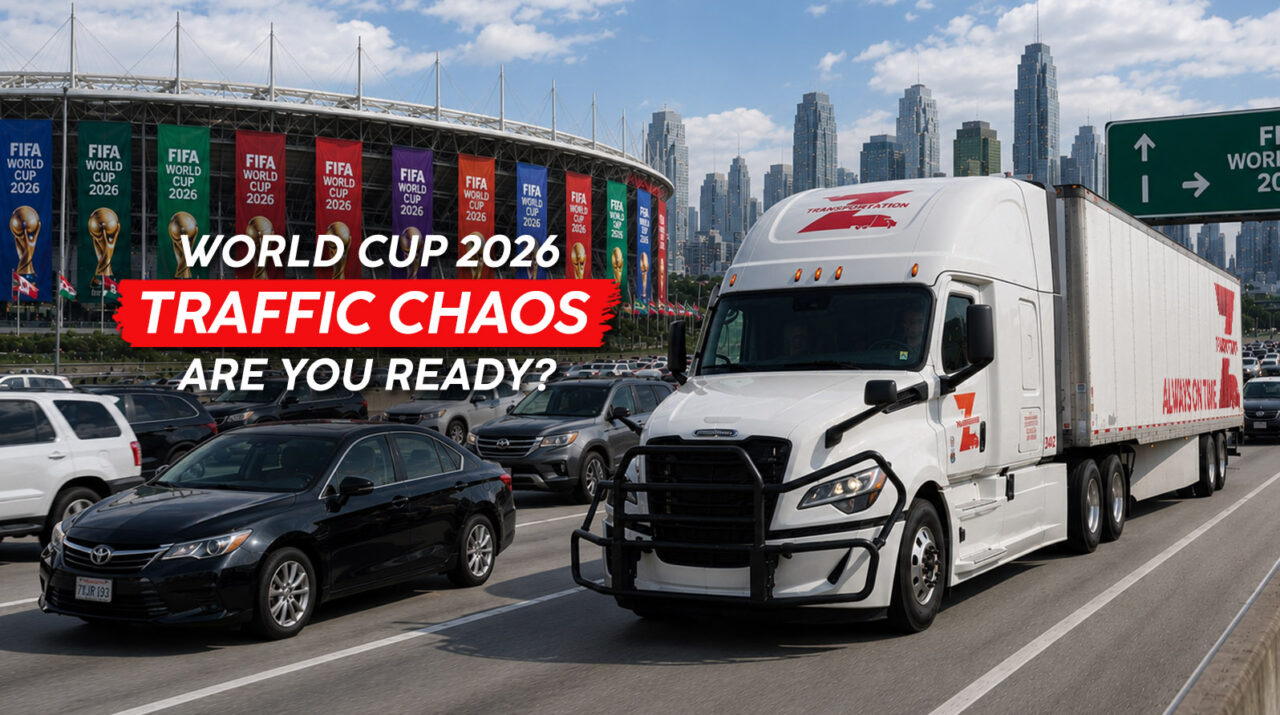
Every four years, the FIFA World Cup captures the attention of millions of people around the world. Fans travel across countries to support their national teams, airports become busier than usual, hotels fill up weeks in advance, and cities hosting matches experience a level of traffic that can completely change normal driving conditions.
For most people, the World Cup is about unforgettable moments, packed stadiums, and celebrating the world’s biggest sporting event. For professional truck drivers, however, it can present an entirely different challenge.
One of the biggest concerns during the tournament is World Cup traffic delays.
Drivers who aren’t prepared may suddenly find themselves sitting in heavy congestion for hours without realizing that a major match is about to begin nearby. Roads that are normally predictable can become overwhelmed by thousands of cars heading toward stadiums at the same time. Police often implement temporary traffic control measures, certain exits become heavily congested, and even alternative routes may experience unusually high traffic volumes.
Unlike commuters or local drivers, commercial truck drivers operate on strict schedules. Delivery appointments, Hours of Service regulations, reload times, customer expectations, and dispatch planning all depend on staying as close to schedule as possible. Losing several hours because of unexpected World Cup traffic delays can create a chain reaction that affects the entire trip.
A delayed delivery may cause a missed pickup.
A missed pickup could affect the next load.
Additional waiting time may reduce available driving hours.
In many situations, one unexpected delay can impact an entire week’s schedule.
That’s why planning ahead becomes especially important during international sporting events like the FIFA World Cup.
Many experienced CDL drivers already know that holidays, concerts, parades, and major sporting events often create unusual traffic conditions. The World Cup simply magnifies those challenges because several host cities experience increased traffic before kickoff, throughout the match, and especially after the final whistle when tens of thousands of fans leave stadiums at once.
These World Cup traffic delays aren’t limited to the roads immediately surrounding the stadium. Major interstates, connecting highways, nearby truck stops, fuel stations, and rest areas can all experience increased congestion as traffic spreads throughout the surrounding region.
Professional drivers who understand this can often avoid unnecessary frustration by making small adjustments before their trip even begins.
Checking the match schedule may only take a few minutes, but it can help drivers identify whether a planned route passes through a host city on game day. If a delivery is scheduled near a stadium during kickoff or shortly after the match ends, discussing possible alternatives with dispatch ahead of time may prevent hours of unnecessary waiting.
Preparation has always been one of the qualities that separates experienced drivers from everyone else.
The best drivers don’t simply react to traffic – they anticipate it.
That’s exactly why understanding World Cup traffic delays is becoming increasingly important throughout the tournament.
Instead of allowing unexpected congestion to disrupt an entire day’s schedule, drivers who stay informed can make smarter routing decisions, better manage their available Hours of Service, reduce unnecessary fuel consumption, and maintain more reliable delivery times.
As the tournament continues, every CDL driver should remember that successful trip planning isn’t only about finding the shortest route.
Sometimes, the smartest route is simply the one that avoids thousands of soccer fans traveling to the same destination at exactly the same time.
In the following sections, we’ll look at why World Cup traffic delays can become so severe around stadiums, how they affect truck drivers, and what practical steps every professional driver can take to stay ahead of the congestion and keep freight moving safely and efficiently.


Why World Cup Traffic Delays Can Be Worse Than Expected
Many drivers assume that traffic around a stadium only becomes heavy once the match begins. In reality, World Cup traffic delays usually start several hours before kickoff and can continue long after the final whistle. Successfully managing World Cup traffic delays is another example of how preparation leads to better performance on the road.
Thousands of fans often begin arriving early to enjoy pre-match activities, visit fan zones, or simply avoid parking issues. As a result, highways leading into the city begin filling much earlier than many drivers expect.
Once the match ends, another wave of congestion begins.
Large crowds leave stadiums at nearly the same time, rideshare vehicles flood pickup areas, public transportation stations become crowded, and local police frequently adjust traffic patterns to manage the flow of vehicles. Even if a truck isn’t driving directly past the stadium, nearby interstates and connecting roads can quickly become congested.
These World Cup traffic delays are rarely limited to one intersection or one exit. They often affect an entire metropolitan area.
For truck drivers operating under delivery deadlines, even an extra hour in traffic can disrupt the rest of the day’s schedule.
Check the Match Schedule Before Planning Your Route
One of the easiest ways to reduce World Cup traffic delays is by checking the match schedule before starting a trip.
Many professional drivers carefully monitor weather forecasts, construction zones, and accident reports before leaving. During the World Cup, match schedules should become another part of that planning routine.
If a delivery is scheduled near a host city on game day, spending just a few minutes checking kickoff times can prevent hours of unnecessary waiting later.
For example, imagine you’re scheduled to deliver freight in Philadelphia during the afternoon, but a World Cup match begins only an hour after your expected arrival. Waiting until you reach the city to discover thousands of fans are already heading toward the stadium may leave you with very few options.
On the other hand, knowing the schedule in advance gives both drivers and dispatchers time to make smarter decisions.
Perhaps the appointment can be moved.
Maybe the route can be adjusted.
Or maybe leaving earlier in the day avoids the busiest traffic altogether.
Simple planning often makes the biggest difference when trying to avoid World Cup traffic delays.
Stadium Cities Require Extra Attention
Not every delivery will be affected by the tournament.
However, drivers traveling through host cities should expect heavier-than-normal traffic on match days.
Major metropolitan areas already experience congestion during normal weekdays. Adding tens of thousands of soccer fans, media personnel, security staff, public transportation vehicles, and event traffic creates conditions that are very different from ordinary rush hour.
Even roads located several miles away from the stadium may experience slower traffic as drivers search for parking, follow detours, or use navigation apps to avoid congestion.
Professional truck drivers should pay special attention whenever their routes include cities hosting World Cup matches.
Planning around these locations is often much easier than trying to drive through them once traffic has already built up.
Reducing World Cup traffic delays often starts with knowing where the crowds will be before they arrive.
Protect Your Hours of Service
One of the biggest risks created by World Cup traffic delays isn’t simply arriving late.
It’s losing valuable Hours of Service.
Traffic doesn’t stop the HOS clock.
Every minute spent sitting in congestion continues counting toward a driver’s available working time. Several hours of unexpected traffic may leave drivers without enough available hours to complete a delivery or reach a safe parking location before their driving time expires. Professional drivers understand that avoiding World Cup traffic delays is just as important as avoiding construction zones or major accidents.
That can affect appointment times, customer satisfaction, reload opportunities, and sometimes even the following day’s schedule.
Experienced drivers understand that protecting Hours of Service is just as important as protecting fuel or equipment.
Planning around expected World Cup traffic delays helps preserve available driving hours while reducing unnecessary stress throughout the trip.
Stay in Contact With Dispatch
Communication becomes even more important during major events.
If heavy traffic begins affecting your planned route, don’t wait until you’re already running several hours behind schedule before notifying dispatch. Providing early updates allows dispatchers to contact customers, adjust appointment times when possible, or identify alternative routing options before the situation becomes more difficult.
Strong communication has always been one of the most valuable habits professional drivers can develop, and that becomes even more important during periods of significant World Cup traffic delays.
Dispatch can’t prevent every traffic jam.
However, they can often help minimize the impact when they receive accurate information early enough.
Small Planning Decisions Can Save Several Hours
Many drivers focus on finding the shortest route.
During the World Cup, the shortest route isn’t always the fastest.
Leaving thirty minutes earlier, taking a bypass around a stadium district, fueling before entering a busy metropolitan area, or scheduling a break before traffic reaches its peak can save several hours later in the day. The busiest highways near stadiums often experience the longest World Cup traffic delays before and after kickoff.
These decisions may seem small while planning a trip, but they often become the difference between arriving on schedule and spending the afternoon sitting in stop-and-go traffic.
The most successful truck drivers understand that trip planning isn’t finished once the GPS calculates a route.
They continue evaluating conditions throughout the day and make adjustments whenever necessary.
That’s one of the smartest ways to reduce World Cup traffic delays, protect delivery schedules, and keep freight moving efficiently throughout the tournament.

Use Technology to Stay Ahead of World Cup Traffic Delays
Modern technology has made trip planning much easier than it was just a few years ago. While experience behind the wheel will always be valuable, today’s professional drivers also have access to tools that can help them avoid unnecessary World Cup traffic delays before they even begin.
Navigation apps such as Google Maps, Waze, and truck-specific GPS systems provide live traffic updates throughout the day. Many state Departments of Transportation also publish real-time traffic information, road closures, construction updates, and incident reports that can help drivers make informed decisions before entering congested areas. Many experienced CDL drivers now consider World Cup traffic delays when planning deliveries through host cities.
However, technology should be viewed as a tool – not a complete solution.
Navigation apps are excellent at reacting to traffic, but they don’t always predict why that traffic is forming. A GPS may suggest an alternate route only after congestion has already developed, which can still leave drivers stuck behind thousands of vehicles.
That’s why combining technology with preparation is often the smartest approach.
Checking the World Cup match schedule before beginning your trip, monitoring traffic conditions throughout the day, and staying aware of changing road conditions can help reduce World Cup traffic delays far more effectively than relying on navigation alone.
Professional drivers who use every available resource often make better decisions, experience fewer unexpected delays, and complete their trips with less stress.
World Cup Traffic Delays Can Increase Fuel Costs
Traffic doesn’t only affect your schedule – it can also affect your fuel economy.
One of the hidden costs of World Cup traffic delays is the amount of fuel wasted while sitting in slow-moving or stop-and-go traffic. Trucks consume significantly more fuel when repeatedly accelerating, braking, and idling compared to maintaining a steady highway speed.
Hours spent crawling through congested city streets can quickly increase fuel consumption without adding productive miles to the trip.
Long traffic backups also create additional engine hours, increased wear on braking systems, and unnecessary strain on both the truck and the driver.
For owner-operators and fleets alike, these costs add up over time.
Even company drivers who aren’t directly responsible for fuel expenses still benefit from avoiding unnecessary congestion. Better fuel efficiency contributes to lower operating costs, improved fleet performance, and more productive driving hours.
Reducing World Cup traffic delays whenever possible isn’t simply about arriving on time – it’s also about driving more efficiently.
Safety Should Always Come Before the Schedule
Heavy traffic creates more than frustration. It also creates additional safety risks.
During the World Cup, roads around stadiums often become filled with drivers unfamiliar with the area, rideshare vehicles making sudden stops, pedestrians crossing unexpectedly, buses transporting fans, bicycles, motorcycles, and emergency vehicles managing event operations.
These conditions demand additional patience and awareness from every professional driver.
Trying to make up lost time by driving aggressively rarely solves the problem. In fact, sudden lane changes, speeding through congested areas, or following other vehicles too closely only increase the likelihood of an accident. Understanding World Cup traffic delays allows professional drivers to make smarter routing decisions before they hit the road.
- The safest approach is usually the most professional one.
- Allow extra following distance.
- Expect unpredictable behavior from surrounding traffic.
- Stay calm when delays occur.
- Remember that arriving safely is always more important than arriving a few minutes earlier.
Experienced CDL drivers understand that professionalism isn’t measured by how quickly they reach their destination – it’s measured by how consistently they make safe decisions, even under pressure.
Final Thoughts: Plan Ahead and Let Everyone Else Sit in Traffic
The FIFA World Cup brings excitement to millions of fans around the world, but it also brings unique challenges for professional truck drivers. Roads that are normally predictable can become heavily congested within a matter of hours, especially near stadiums, downtown areas, and major highways leading into host cities.
Fortunately, most World Cup traffic delays can be reduced – or even avoided entirely – with proper planning.
Checking the match schedule before leaving, monitoring live traffic conditions, communicating early with dispatch, protecting your Hours of Service, and remaining flexible throughout the trip can make a significant difference.
Small planning decisions often prevent major problems later in the day.
Professional drivers know that success isn’t determined only by what happens behind the wheel. It also depends on preparation before the truck ever leaves the parking lot.
The drivers who consistently stay ahead of traffic, anticipate potential delays, and adjust their routes when necessary are often the ones who experience less stress, protect their schedules, and deliver freight more efficiently.
During the World Cup, that preparation becomes even more valuable.
Rather than getting caught in hours of congestion near packed stadiums, make planning part of your daily routine. A few minutes spent reviewing your route today could save several hours on the road tomorrow.
At Z Transportation, we encourage every driver to stay informed, communicate with dispatch, and make smart decisions that prioritize safety, efficiency, and professionalism. Even a few minutes of planning can help drivers avoid unexpected World Cup traffic delays later in the day.
Because avoiding World Cup traffic delays isn’t just about saving time.
It’s about protecting your schedule, preserving your Hours of Service, reducing unnecessary fuel consumption, and ensuring every trip is completed as safely and efficiently as possible.
The best drivers don’t simply react to traffic.
They stay one step ahead of it.
Heavy traffic doesn’t only waste time – it also increases fuel consumption. Learn how to improve your fuel economy by reading our guide on The Costly Fuel Mistakes Truck Drivers Make Every Day. Understanding World Cup traffic delays allows professional drivers to make smarter routing decisions before they hit the road.